Reader note: This article is for general household education. It is not financial, legal, tax, or investment advice. Your costs and results depend on your own situation.
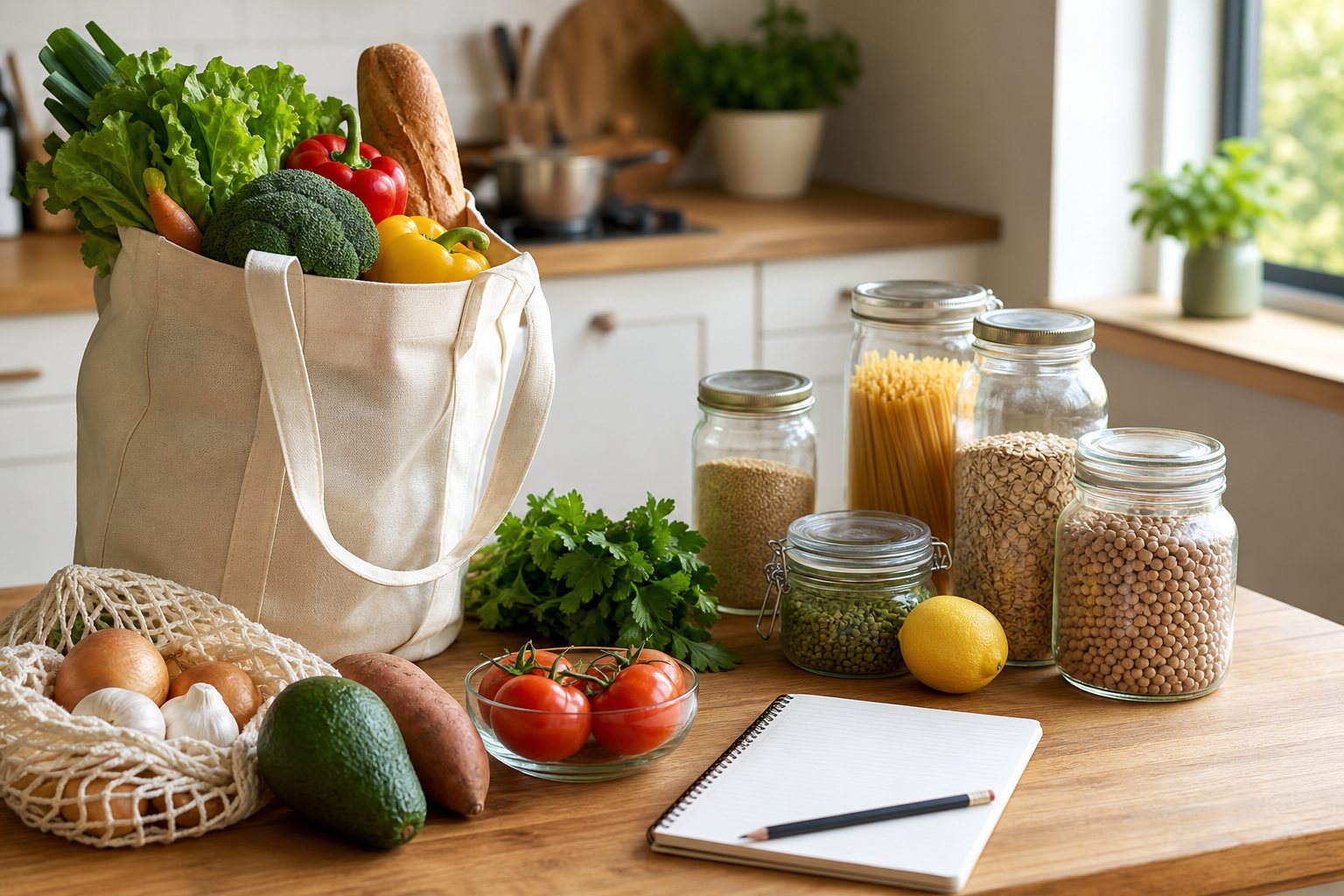
1. Shop your kitchen before the store
Before making a list, check pantry shelves, freezer items, and produce that needs to be used. Planning from what you already own prevents duplicate purchases.
2. Build meals around flexible staples
Rice, potatoes, oats, beans, pasta, eggs, frozen vegetables, and simple proteins can become many meals. Flexible staples reduce last-minute takeout pressure.
3. Use a replacement list
Keep a running list of what actually runs out. This prevents buying three extras of one item while forgetting the thing you needed.
4. Compare unit prices carefully
Package size and sale tags can be misleading. Unit pricing helps you compare the real cost per ounce, pound, serving, or item.
5. Avoid convenience tax traps
Pre-cut foods, single-serve packs, and impulse snacks can be useful sometimes, but they often raise the bill quickly. Choose convenience on purpose, not by accident.
6. Protect the freezer
A simple freezer inventory can save money by making frozen food visible before it gets forgotten, freezer-burned, or replaced unnecessarily.
7. Keep one easy emergency meal
A shelf-stable backup meal can prevent a delivery order on a busy night. Keep it simple enough that you will actually use it.
Bottom line
Saving money usually comes from a few repeatable habits, not one dramatic trick. Pick one action from this page, try it for a week, and keep what actually fits your household.